
Intuit’s DevPortal Personalization
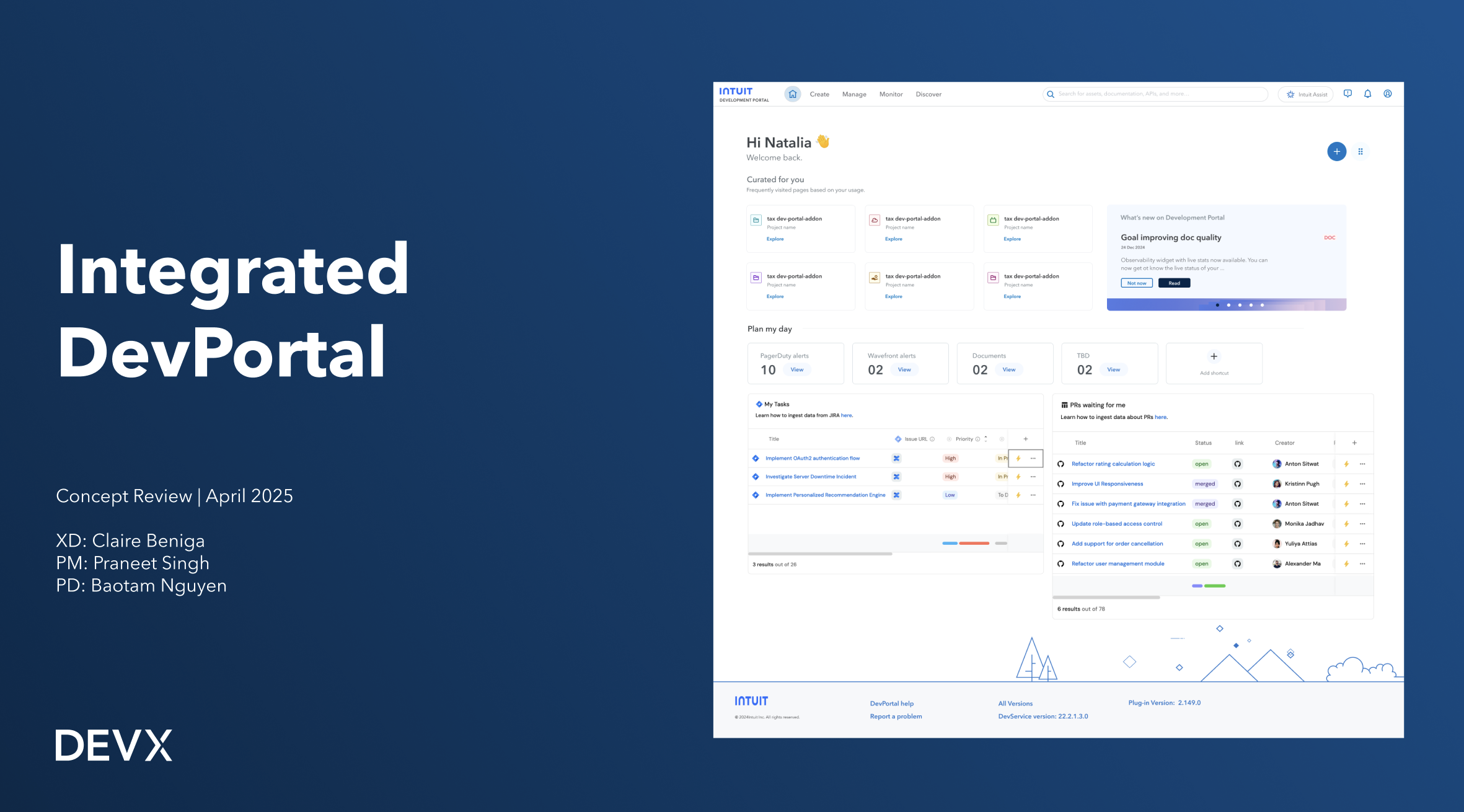
Integrated developer portal to reduce tool fragmentation and improve engineering velocity. Based on user research and cross-functional collaboration, we prioritized Jira/GitHub as high-signal widgets and designed a scalable integration framework.
Project Overview
The goal of this project was to evolve DevPortal into a unified, single-pane-of-glass solution that streamlines the software development experience across Intuit.
The Challenge
Developers across various business units (BUs) at Intuit rely heavily on tools like Jira and GitHub, but frequent context switching between them disrupts their workflow. To boost efficiency, developers need fast, lightweight access to insights and actions that support quick decision-making and task execution. We aimed to solve this by designing a centralized workspace that developers can depend on throughout their daily work.
Problem Statement
Every day developers bounce between tools, trying to piece together the story of their work. This fragmentation creates inefficiencies and slows progress. Our core challenges fall into three key areas:
Tool Fragmentation
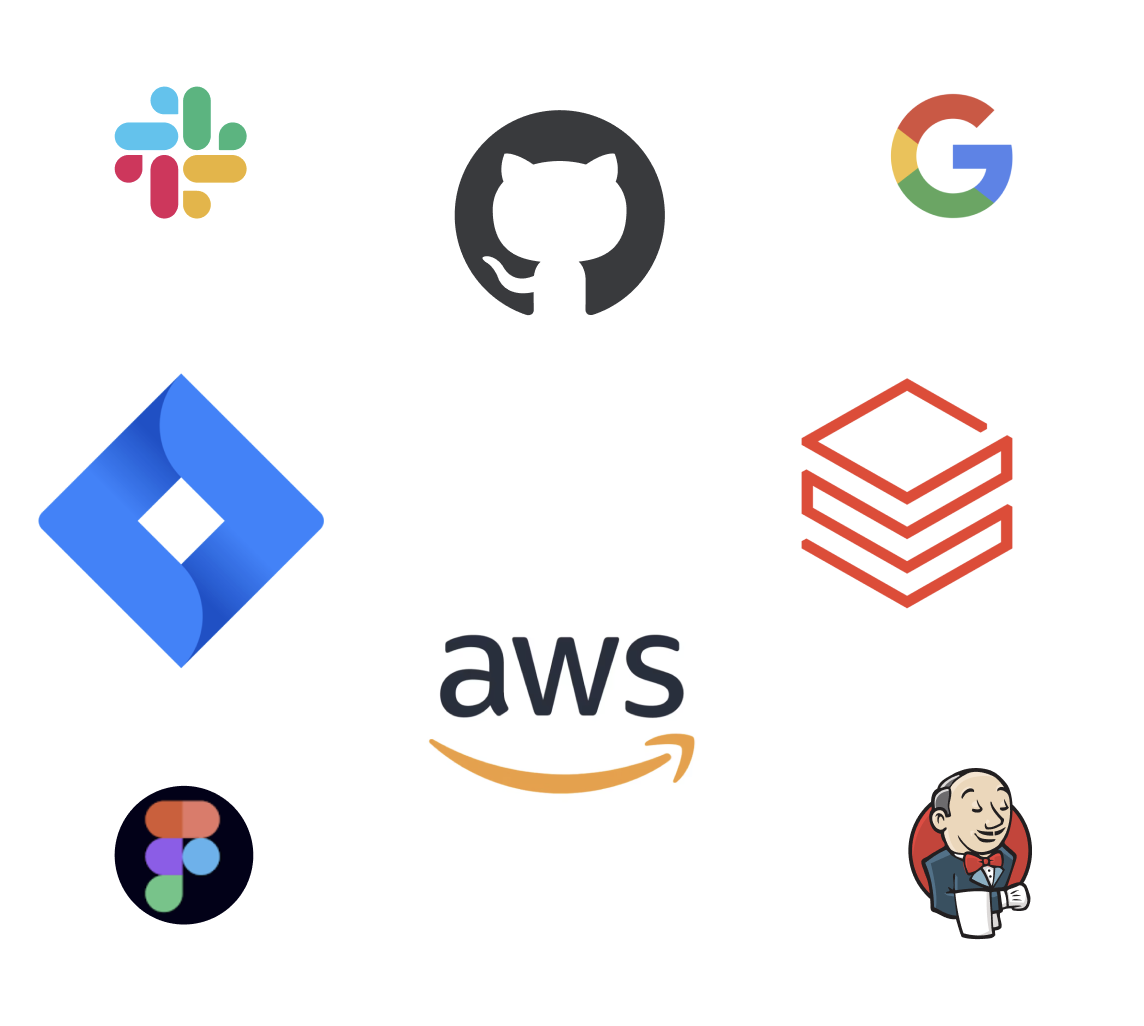
Developers rely on a wide range of tools—Jira, GitHub, Jenkins, Databricks, Figma, monitoring systems, and more—often operating in silos.
Solution: Consolidate these tools into a single interface to reduce tab switching and eliminate the need to learn multiple UIs.Lack of Visibility Across Systems
Tracking the status of projects, assets, and applications across different phases of the development lifecycle is difficult and time-consuming.
Solution: Contextually surface the most relevant information to help developers quickly grasp the bigger picture.Slowed Developer Velocity
Critical information is scattered, and repetitive tasks eat into time that could be spent building.
Solution: A unified workspace empowers developers to take quick actions and make informed decisions, reducing cognitive load and friction.
Research & Discovery
Our research approach included a comparative analysis, a service blueprint, and a survey distributed to over 100 developers. We followed this with concept testing involving 8 participants from 5 different business units. Key insights from our research include:
Developers value personalized views: Integrations were most appreciated when surfaced on the homepage, filtered to show everything relevant to the individual user.
Actionability is critical: Developers want views that not only display information but also allow them to take immediate, meaningful action.
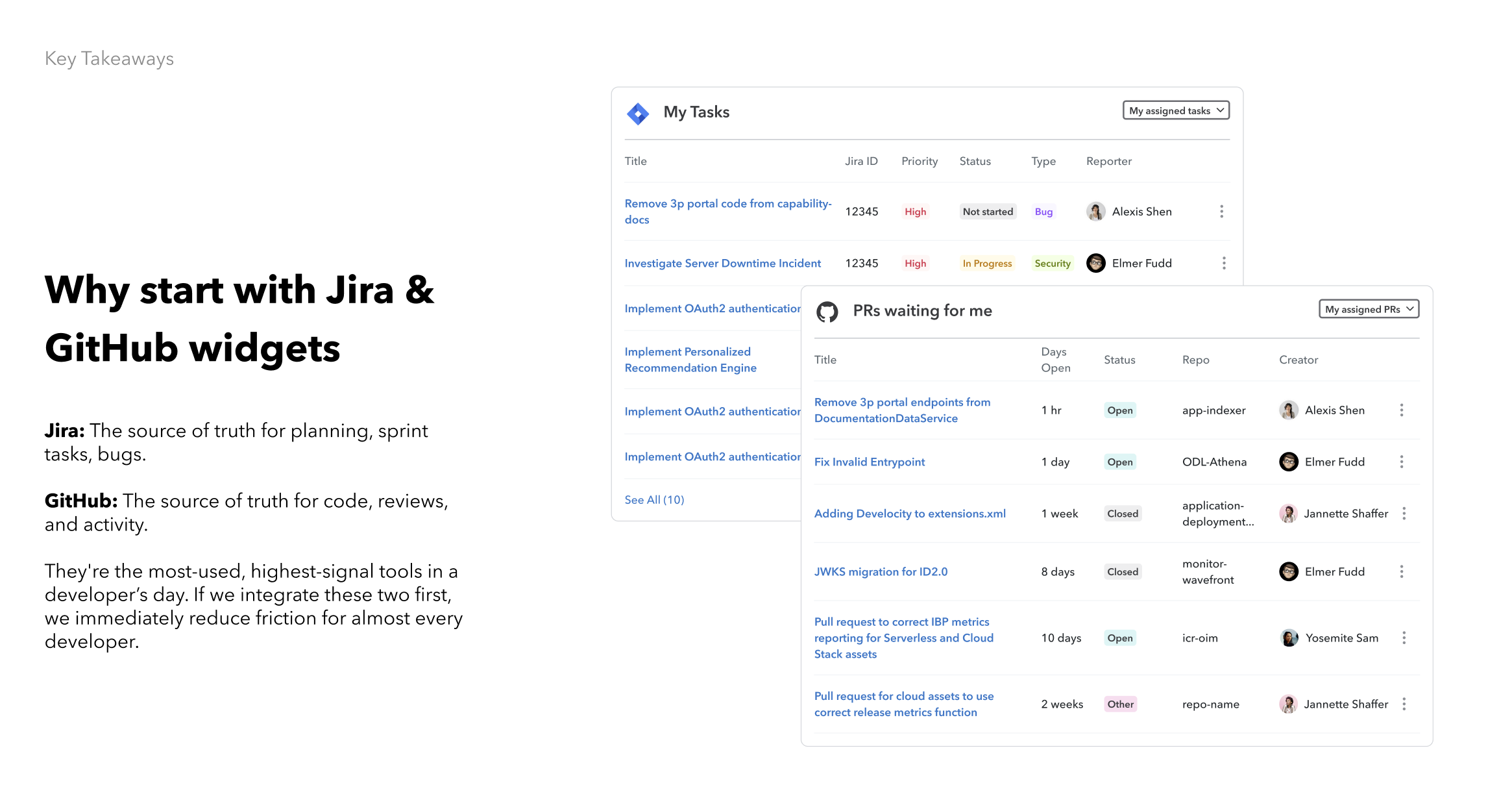
Jira and GitHub are essential: These two tools are universally used across teams, while integrations with additional tools are seen as valuable but not critical.
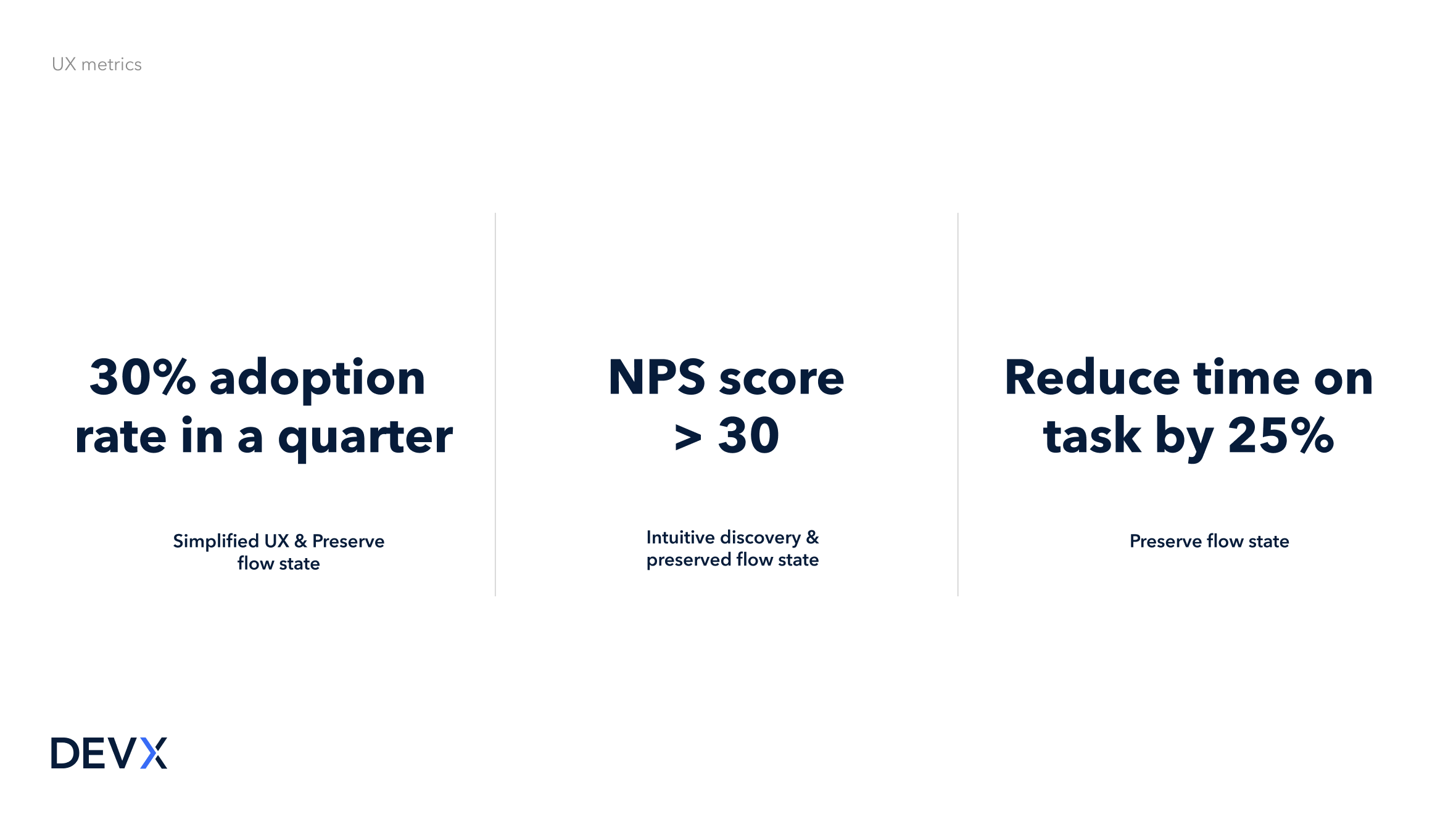
Success Metrics
Design Principles
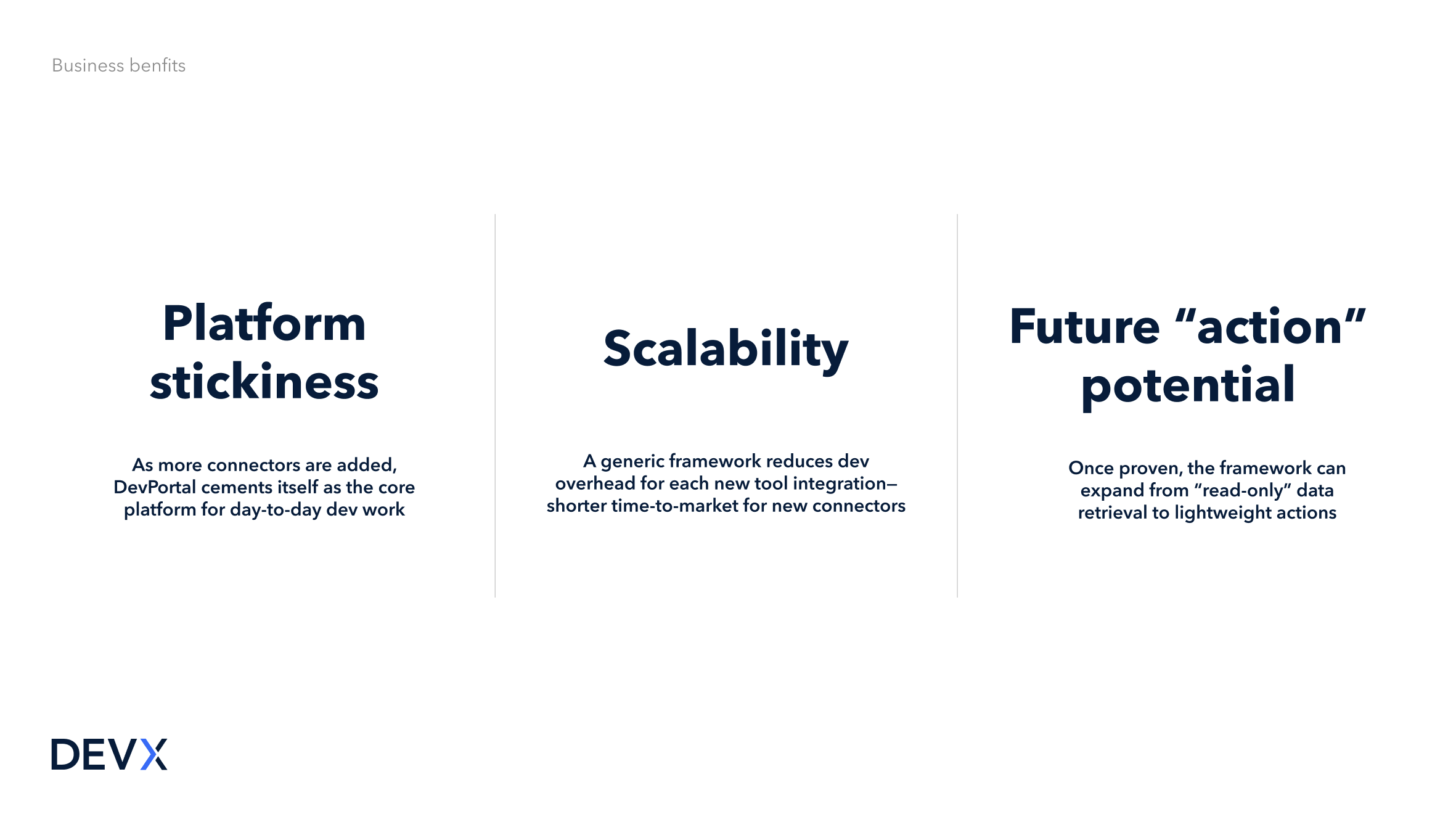
Scalable
The dashboard should adapt to users’ evolving workflows—supporting everything from onboarding new developers to integrating future tools and widgets across the development lifecycle.Personalized
Design for relevance. The experience should feel intuitive and tailored, helping users easily surface what matters most without unnecessary friction or relearning.Actionable
Keep users in flow by enabling quick, lightweight actions within context. Minimize tool switching and cognitive overhead for common or repetitive tasks.
Divergent concepts
To reimagine the DevPortal homepage, we explored a range of divergent design directions focused on integration and personalization. These included interactive widgets like gamification elements, guided flows, alerts, and projects. Our goal was to create a more engaging and tailored experience for developers.
However, through testing and feedback, a clear pattern emerged: developers valued signal over sparkle. Information density, relevance, and clarity won the day. What they needed most was a homepage that prioritized what mattered right now, without noise.
This insight led us to a more streamlined, utility-first design—a clean, simplified layout that surfaces key actions and data at a glance, putting the developer’s work front and center.
Concept Walkthrough
As a first step toward a personalized experience, all developers arriving to the DevPortal homepage are automatically shown these integrated third-party widgets by default. By pre-populating the homepage with these widgets, we ensure critical information is visible to everyone, regardless of their role or familiarity with the platform.
This approach strikes a balance between guidance and flexibility: it drives awareness of essential tools and content without requiring upfront setup, while still allowing developers to customize or remove widgets based on their unique workflows. It lays the foundation for a personalized DevPortal experience that can evolve into to a tailored single-pane-of-glass over time.